
Resilience Project Series: Regenerate, Learn, Grow in Clarence Valley
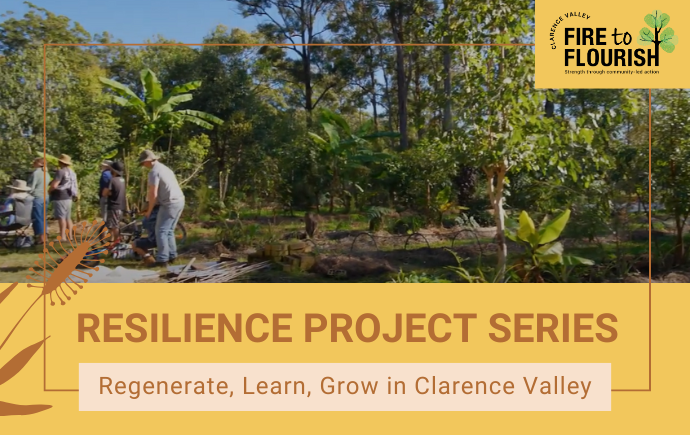
Project: Regenerate, Learn, Grow - Food Security, Care for County and Community Connection
Funded amount: $10,000
Recipient: Share Create Innovate / Chaffin Creek Farm
Community: Pillar Valley, NSW
Chaffin Creek Farm is a shared space for small-scale regenerative farming on Yaegl Country in the Pillar Valley region of NSW.
Before regenerative farming practices were introduced on Chaffin Creek Farm, this locally-owned paddock had seen its fair share of land-clearing, bushfires and flooding, making landscape recovery and resilience a challenge. Meanwhile, local communities often struggled with food security due to damaged Country, reduced biodiversity, supply issues and a lack of food grown in the Clarence Valley.
With the help of regenerative farming workshops funded by Fire to Flourish Clarence Valley, Gina Lopez and Robbie Hill have turned Chaffin Creek Farm into a thriving community space, helping ensure that locals have the knowledge, supplies and support needed for food security.
As part of F2F Clarence Valley’s Resilience Planning to Granting funding round earlier this year, Fire to Flourish funded six regenerative agriculture workshops throughout 2024, covering biodynamics and syntropic agroforestry. The aim of these workshops was to build local community food security, improve knowledge and connections within the community, enhance soil health, foster nutritious food growth, and support landscape recovery and resilience.
Fire to Flourish spoke with Gina – the project lead, local farmer and Director of Share, Create, Innovate – about the difference these workshops are making to the local community.
Beth Patch: What’s the origin story for this project and why did you get involved?
Gina Lopez: After the floods in Clarence Valley, lots of people left. A lot of smaller-scale farms packed up. It’s a hard gig and we don’t make much money. So regenerative farming was something I wanted to do for my own food security and my community’s food security. Because if I’ve got food security and abundance, then I can share both the food and the knowledge. Then we start to strengthen that shared local capacity to be able to restore the land and feed ourselves. It’s a different model to market gardening, which doesn’t always work. I realised that I was never going to earn a proper income off it, I was never going to be secure that way. I looked at all the local farmers and it was costing them, it was breaking them. So then it became more about creating demonstration spaces for educators to come onto this shared land and be able to showcase these regenerative principles. We wanted to pass that gift on to local landholders. It’s about creating a different model for food security.
BP: So the initial goal was food security and growing food sustainably? Has that worked well?
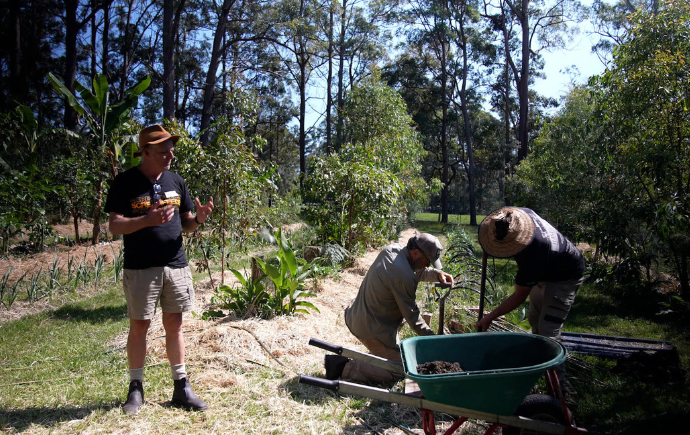
GL: The initial goals, which this project is now definitely achieving, were growing our own climate-resilient food, improving soil health, building a network of landholders, and for regenerative farming practices to become normalised for conventional farms and land managers. Regenerative farming is about growing food in a way that restores the ecosystem, using principles like syntropic agroforestry and biodynamics and soil regeneration. When you see the effects of these principles put into practice, like at Chaffin Creek Farm, it’s just amazing, the abundance of food. When we run the biodynamics workshops, we make preparations together, like soil activator, tree pasta, silica spray and biochar. Then everyone takes those skills and supplies home with them.
Readers can watch Chaffin Creek Farm’s video about syntropic agroforestry here:
BP: How else do the regenerative farming workshops ultimately strengthen climate resilience for the local community?
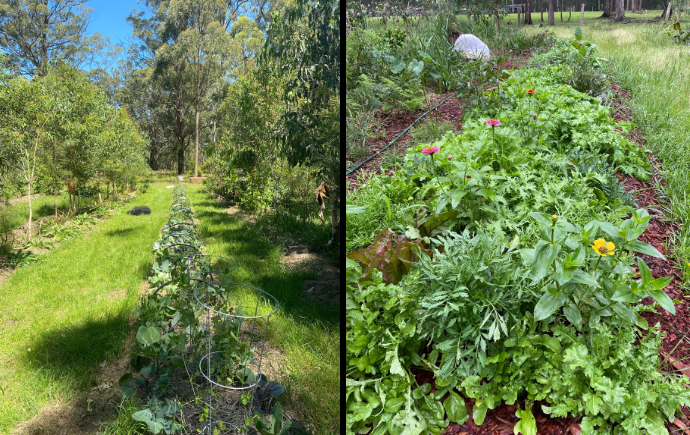
People are learning to grow their food in a way that renews the land, waterways and soil through biodiversity, with fruit trees, vegetables and herbs growing alongside eucalyptus and other native trees in abundance. It means we can create food that is secure, climate-resilient and independent from supermarkets. It also creates community connection in preparation for the impacts of climatic events because it encourages cooperation between community members.
BP: What does it actually mean for food to be climate-resilient?
GL: We’re creating a healthy ecosystem. So for example, we never water the gardens. Because of the way we’ve designed the beds and the ecosystem, all the natural water cycles and mineral cycles start to function properly again. You’ve got a functioning soil system that is capable of holding water, and a canopy of native trees that means the food isn’t so exposed to the sun. So during drought, it maintains the water, during flood it doesn’t become hydrophobic, during frost the plants are all protected by the canopy. It’s an entirely climate-resilient ecosystem with healthy soil biology, with the ability to self-heal and self-regenerate, and we’re all a part of that ecosystem. But also, it means we’re not so reliant on external food providers like supermarket suppliers that often get cut off during disasters.
BP: What did the Fire to Flourish funding allow you to do with these workshops that you weren’t doing before?
GL: It’s taken the pressure off the financials. We were losing money running the workshops prior to the funding. The funding allows us to be generous with the workshops, paying the people who help and covering some ticketing costs so that the workshops are financially accessible for locals. Take photography for example, which this funding has partly paid for. The photos are just such a huge part of it because that kind of marketing helps attract people to the workshops, which means we can keep passing these skills on. It also helped pay for videos to be made, which means we can paint a real picture of what we do and tell the story with credibility. The trust building as a result of those videos and photos is amazing, so now more people in the community know we’re doing the workshops and that they can come and learn from people they trust.
BP: Why Fire to Flourish and not other funding avenues?
GL: I was part of the Fire to Flourish resilience planning team and the funding process was easier than other avenues. Obtaining funding for community events is often difficult or funding just isn’t available.
BP: What’s the best thing you’ve seen come out of the workshops? Any surprising side effects you didn’t expect?
GL: I really undervalued the benefit of the deep community connection that the workshops would enable between participants. It was through the granting process and the funding that the community connection of this project really started to deepen and now it’s an integral part of community resilience. You know, trying to get all my neighbours involved so everyone has somewhere to meet and spend time, now we’ve got a habit of meeting up, but we’re also solving a real problem of food security.
BP: It sounds like there were also some really significant mental health benefits that weren’t originally expected.
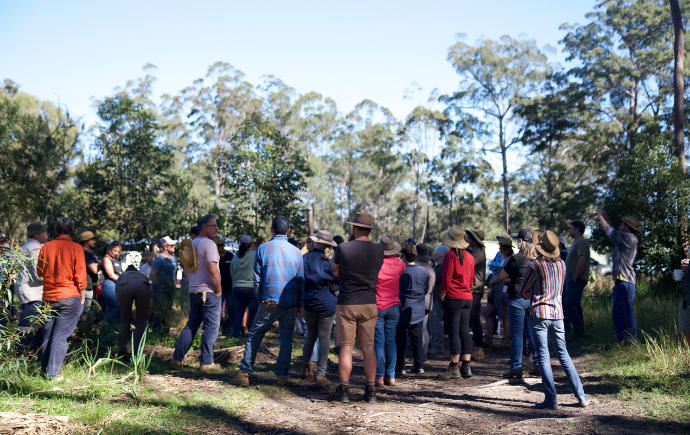
GL: Yeah, the mental health benefit of the workshops has been amazing to watch. Each workshop essentially acts as a mental health day for farmers. Back in the day, when it was a rainy day or a quiet day on the farm, everyone would gather on a porch and there was this community connection that happened there all the time, where people would tell stories and share knowledge. That just doesn’t happen anymore. So these workshops are an opportunity for people to come together to share stories and knowledge, and have a bit of a mental health day. So we have all sorts of people coming, some significant farmers and then others who only have access to smaller plots of land, but just like to spend time together.
BP: Where to next for this work?
GL: The last two workshops of this Fire to Flourish series are coming up, with a syntropic agroforestry ‘Grow a Forest’ workshop on 30 November - people can buy tickets on Humanitix - and a regenerative breath workshop next year. But we’ve got some new funding from other sources, so we’re organising even more workshops to share knowledge about growing our own food. That was an unexpected benefit of the Fire to Flourish funding actually, it has set us up to start applying for other funding. Because now we have the skills and capacity to run the workshops, it attracts funding from other places or helps us show that we are capable, so we can pass those skills on with new workshops funded by other organisations like Caring for Catchment.
Connect with Chaffin Creek Farm through their LinkTree, Facebook or Instagram pages. Watch the amazing workshop videos created on Chaffin Creek Farm here.
For those living in Clarence Valley who want to get involved in ongoing and future workshops at Chaffin Creek Farm, contact Gina Lopez: gina.sharecreateinnovate@gmail.com
Learn more about F2F Clarence Valley here. You can also subscribe to our monthly newsletter and follow Clarence Valley on Facebook to hear of upcoming funding opportunities and all latest updates.