Resilience Project Series: Mungguradha (Dhurga for 'My Home') in Eurobodalla
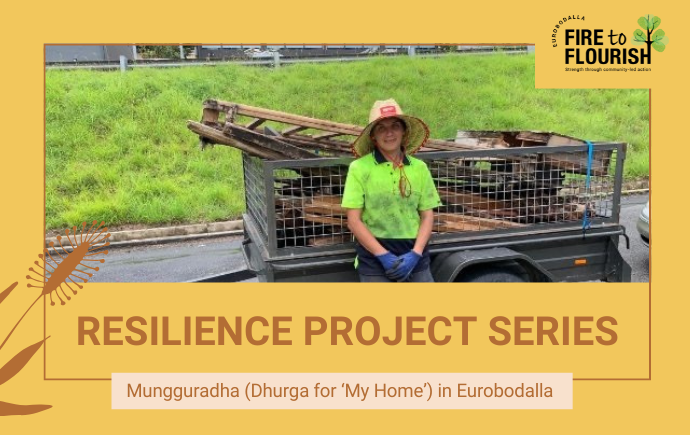
Project: Mungguradha (Dhurga for ‘My Home’)
Recipient: Steph’s Home Services
Community: Mogo, Batemans Bay, Moruya and other Eurobodalla communities
All images shared in this article are credited to Steph's Home Services.
During the 2019/20 bushfires, many locals who lived close to fires burning along the NSW South Coast found that their homes, which may not have been damaged by the fire itself, were instead in danger due to embers that floated down into their backyards.
Many of the locals affected by this issue were people living in low socioeconomic areas including social housing, or Elders living in areas such as Mogo, Batemans Bay, Moruya and beyond, who do not have access to affordable green or hard waste disposal.
Steph Morris – a Wiradjuri woman born and bred in Mogo, and the owner of Steph’s Home Services based in Bateman’s Bay – saw an easy solution to this problem: clean up their yards for them for free.
Steph proposed the Mungguradha (Dhurga for ‘My Home’) project to Fire to Flourish Eurobodalla during their open-call community grant round in 2023, and was successfully granted funding to cover the costs of waste disposal on behalf of many vulnerable community members in need.
Fire to Flourish spoke to Steph about the project, which not only solved a built environment issue but also strengthened bushfire preparedness and social connectedness among those she was helping.
Beth Patch: So tell me a bit about the Mungguradha project. How did you get the idea, and how did it all work?
Steph Morris: Well, I’ve always been passionate about ethical waste disposal. Growing up, I remember everyone always helped each other with yard work and getting rid of stuff.
I’m from Mogo, where a lot of the houses caught alight [during the 2019/20 bushfires] just from having embers hit their backyards.
I was seeing Elders not getting enough help. Elders that had things around their home that needed doing – yard maintenance, tree clearing, hard waste removal, general yard fire safety. Waste from these activities costs so much money to dispose of at the tip. People can’t afford to get rid of them. Once-a-year council pickup just is not often enough and there’s no affordable alternative to pay for waste removal around here.
So when I heard that Fire to Flourish was doing a granting round, I got in touch with Kizzy [Fire to Flourish Eurobodalla Community Lead] who I already knew from her teaching days, and told her my idea for helping people get their yards done – mothers, vulnerable people, Elders.
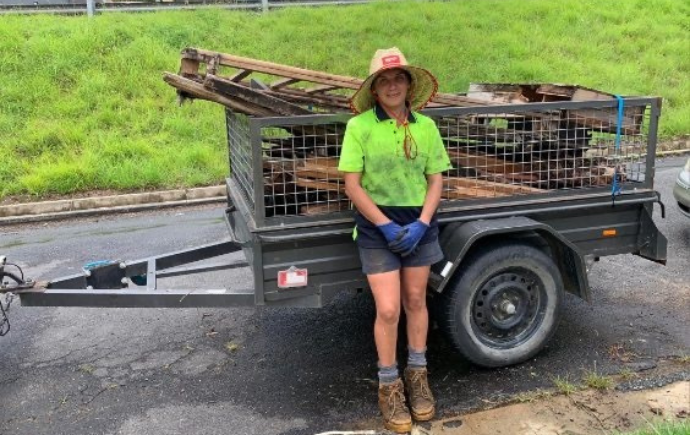
The funding paid for trailer hire, wages for myself and other cleaners, and tip fees.
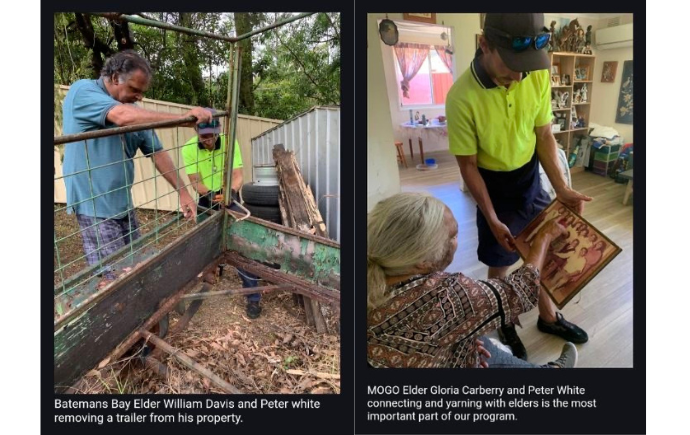
We helped a lot of people in early 2024, not just with their waste disposal but also helping them understand their fire safety. Once you got talking to them, they were happy to have a yarn about what needed doing, and how they could be safer in future.
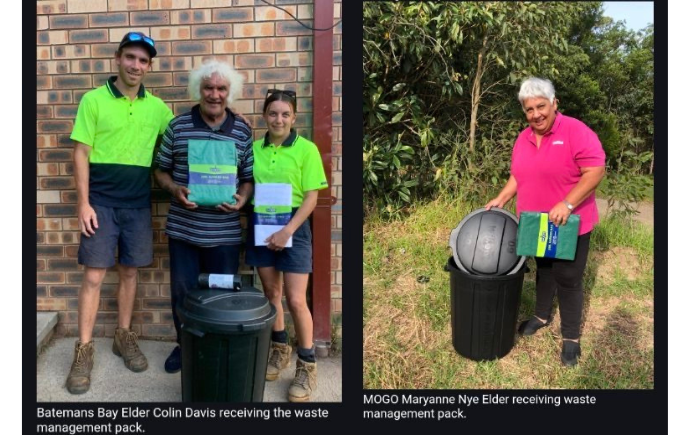
And we gave each person a waste management pack and a bag of resources. Things like fire safety sheets, compost information, native seeds, bin liners and green waste bags, a new large bin for the yard, plus gloves and hand sanitiser, info about other local recycling and waste services, helpful things like that.
We helped Elders and other people in Mogo, Batemans Bay, Moruya and surrounding suburbs that we could get to in time, before the money ran out. Elders from all different tribes, all were included, not just from Batemans. All these people that deserve to have services. We started with people who needed it the most, and then worked through others.
BP: So in addition to the overall goal of reducing fuel load in people’s backyards and increasing fire preparedness, were there other goals of this project that emerged as it went on?
SM: One other goal that became clear was to build trust within the community. The bushfires and then COVID really disconnected people and created a lot of distrust of outsiders. Here we were, going into people’s homes, but we knew everyone already – either through our own families or community – and were there to help and support them, so now there’s more trust than there was before.
We would also go and have a cuppa and a yarn before we started each job. You have to get to know them first before you try and help. So yeah, there’s definitely more trust in the community now. Those Elders and mothers have someone they can call when they need help removing waste or having other work done – if I can’t do it myself, I can find someone who can.
BP: And it also had this added benefit of social cohesion, which I imagine will help with community resilience in the future.
SM: Exactly. Resilience comes down to more than just being strong and able to get through something. It’s about community togetherness. After the fires, a lot of us couldn’t get to our families and were worried about them. Family togetherness and community is so important during disasters.
BP: So how did you come to hear about Fire to Flourish’s granting process, and what was that whole experience like for you?
SM: Oh, it was such a positive experience. Kizzy and the team kept me informed from start to finish. They really make you feel like your project is important – not just that they’re flicking you money.
And it was easy for me to meet the criteria. So many grants have unrealistic KPIs etc, whereas with these projects we just need to bring everyone together and get it done, and we had the freedom to do that.
Plus, my idea ticked all the boxes for what the community needed for this grant round. There’s nothing else like the Mungguradha program in the community, so it was a no-brainer, we obviously really needed it.
I’ve seen [Fire to Flourish Eurobodalla] fund so many other community projects since then, and they’re all just amazing. I haven’t felt that positive spirit in Mogo in years.
BP: From your perspective, were there any highlights that you didn’t expect, as a result of this project?
SM: Getting out into the community and seeing my Elders was a huge bonus. I used to live out there at Mogo, but as you get older your work and kids get in the way of getting into town. IT was amazing having time with Elders and talking to them about everything and hearing what their needs are. Their needs are so simple half the time – they just want someone to talk to.
Connect with Steph’s Home Services or Fire to Flourish Eurobodalla via Facebook.
You can also subscribe to our monthly newsletter to read about Eurobodalla’s latest updates and next steps.